Key Takeaways
- Hot spots are painful, red, moist sores that can appear suddenly on a dog's skin.
- These sores can spread quickly if not treated promptly.
- Most hot spots respond well to gentle, natural treatments when caught early.
- Avoiding harsh chemicals is important as they can slow down the healing process.
- Quick action is essential for effective hot spot treatment.
Table of Contents
- Quick Guide – What To Do The Moment You Spot a Hot Spot
- What Exactly Are Hot Spots on Dogs? (And Why They Seem To Appear Overnight)
- Root Causes – Why Your Dog Keeps Getting Hot Spots
- Step‑By‑Step: How To Treat a Dog Hot Spot at Home (Safely and Naturally)
- Natural & Homeopathic Support: How BestLife4Pets Remedies Fit Into Hot Spot Care
- Hot Spots vs Other Skin Problems: How To Tell What You're Looking At
How To Treat Hot Spots On Dogs Naturally (Without Making Them Worse)
When you discover an angry, red patch on your dog's skin that seems to have appeared overnight, you're likely looking at a hot spot. These painful, moist sores can spread rapidly if not addressed properly, but the good news is that most hot spots respond well to gentle, natural treatment when caught early. The key is acting quickly while avoiding harsh chemicals that can actually slow healing.
Hot spots, or acute moist dermatitis, develop when your dog gets trapped in an itch-lick-scratch cycle. What starts as a small irritation becomes a self-perpetuating wound as constant licking creates the warm, moist environment bacteria love. Understanding how to treat hot spots on dogs naturally means breaking this cycle while supporting your pet's own healing process.
For pet parents seeking a holistic approach, our Dog Allergy Relief & Immune Support can provide targeted support for dogs experiencing skin irritation and discomfort. This gentle formula helps support the body's natural immune response while promoting skin comfort during flare-ups.
Quick Guide – What To Do The Moment You Spot a Hot Spot
Quick Action Steps
- Stop the licking immediately with a cone or inflatable collar
- Gently trim fur around the area (1-2 inch margin)
- Clean once gently with cool water and pat completely dry
- Monitor size and color over the next 12-24 hours
- Seek veterinary care if spreading rapidly or showing signs of infection
Spotting a Hot Spot in the First 5 Minutes
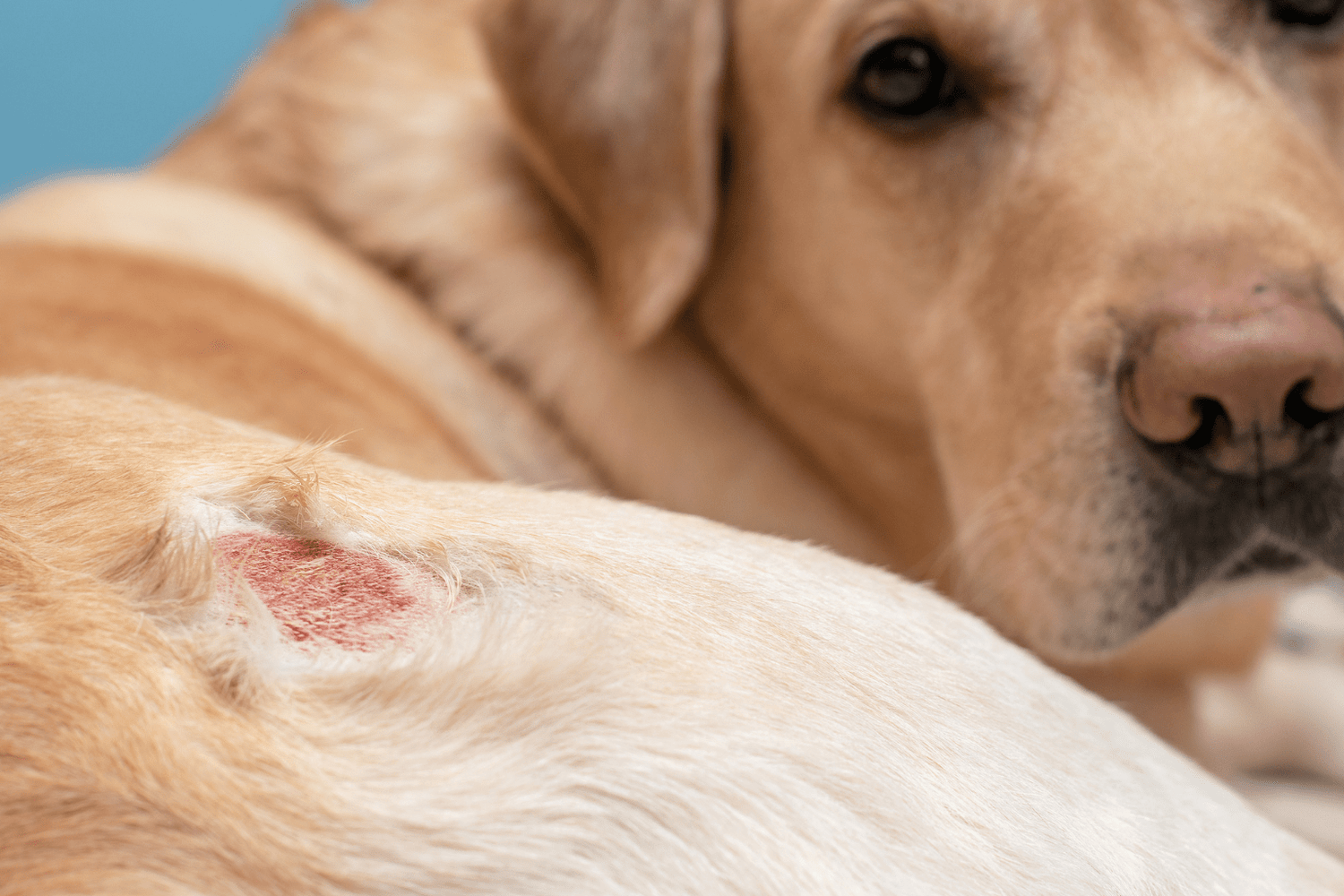
A true hot spot appears as a red, moist, painful patch of skin that's often perfectly round with missing hair. Unlike a simple scratch or dry irritation, hot spots feel warm to the touch and may have a slight odor. You'll typically find them on your dog's ears, neck, hips, tail base, cheeks, or inner thighs where moisture gets trapped.
Early hot spots start as small red patches the size of a quarter, but can expand to palm-sized wounds within 24-48 hours. The affected area will be extremely tender, causing your dog to yelp or pull away when touched. Advanced hot spots develop a crusty edge with oozing in the center and a distinctly unpleasant smell.
5 Immediate Steps To Calm and Protect the Area
Your first 30 minutes of care can make the difference between quick healing and a trip to the emergency vet. Start by gently separating the fur to assess the size without scrubbing or irritating the area further.
Step-by-step immediate care:
- Assess carefully: Measure the diameter and note the color and moisture level
- Trim surrounding fur: Use electric clippers to remove hair 1-2 inches around the spot so air can reach the skin
- Clean gently: Rinse once with cool water and pat dry with soft gauze, no rubbing
- Prevent further damage: Apply a cone, inflatable collar, or soft t-shirt within 10 minutes
- Document progress: Take a photo to compare healing over the next day
Never use harsh soaps, human antiseptic creams, or scrub vigorously. These actions can drive bacteria deeper and expand the affected area.
When You Can Treat at Home vs When It's An Emergency
Single hot spots smaller than a silver dollar that aren't spreading rapidly can often be managed at home, especially if your dog is still eating normally and acting alert. However, multiple lesions, thick yellow or green discharge, strong odors, or rapid spreading within 12 hours require immediate veterinary attention.
Watch for fever signs like lethargy, loss of appetite, or excessive panting. Hot spots around the face, ears, or genital area also need professional evaluation due to the risk of deeper infection. Natural remedies work best as supportive care alongside, not instead of, necessary veterinary treatment.
Not a substitute for professional veterinary advice.
What Exactly Are Hot Spots on Dogs? (And Why They Seem To Appear Overnight)

Plain-English Definition of Canine "Hot Spots"
Hot spots are areas of acute moist dermatitis where your dog's skin becomes inflamed, raw, and irritated due to constant licking or scratching. Unlike typical itchy patches that remain dry, hot spots stay moist and angry-looking because your dog can't stop worrying at them. The medical term sounds scary, but it simply describes skin that's become irritated, moist, and prone to bacterial overgrowth.
What makes hot spots different from other skin problems is their rapid development. A tiny bug bite or minor irritation can become a large, painful sore within 24-72 hours once the itch-lick-scratch cycle begins. The constant moisture from licking creates the perfect environment for skin bacteria to multiply.
Are Hot Spots Contagious or Dangerous?
Hot spots themselves aren't contagious to humans or other pets, but underlying causes like fleas or mites can spread. The real danger lies in ignoring them, untreated hot spots can develop into deeper skin irritation, cause permanent hair loss, or create scarring. Hot spots near the face, ears, or anal area require extra caution because irritation in these areas can spread to more serious locations.
Most hot spots remain surface-level skin irritations that heal completely with proper care. However, complications can arise if the area becomes deeply irritated or if underlying causes aren't addressed.
How Hot Spots Develop: The "Itch–Lick–Ouch" Cycle
Hot spots follow a predictable pattern that can escalate quickly. It starts with a minor irritation, maybe a flea bite, small scratch, or bit of trapped moisture. Your dog feels the itch and begins licking or chewing the area for relief.
The constant moisture from saliva creates the perfect environment for bacteria to multiply on the skin's surface. Within 12-24 hours, what began as a small irritated patch becomes inflamed, painful, and noticeably larger. The more it hurts, the more your dog worries at it, creating a cycle that can turn a dime-sized spot into a palm-sized wound in just two days.
This rapid progression explains why hot spots seem to appear "overnight." Bailey, a Golden Retriever from our community, went from a tiny bug bite behind his ear to a quarter-sized raw patch in less than 48 hours because he kept licking at it during the night when his family couldn't intervene.
Root Causes – Why Your Dog Keeps Getting Hot Spots
The Big Five Triggers You Can't Ignore
Understanding what starts the itch-lick cycle helps you prevent future flare-ups. Allergies top the list, both food sensitivities and environmental triggers like pollen or dust mites. Dogs with allergies often develop hot spots in the same locations each season, particularly around the face, paws, and belly where allergens make contact.
Parasites, especially fleas, create intense itching that leads directly to hot spots. Even indoor dogs can be affected when fleas hitch rides on clothing or other pets. Moisture and humidity play a huge role too, dogs who swim, get caught in rain, or live in humid climates are at higher risk when wet fur stays damp for more than an hour.
Skin and ear problems often trigger hot spots in specific patterns. Ear irritation commonly causes cheek and neck lesions as dogs scratch at their ears, while anal gland issues lead to tail base and inner thigh hot spots. Finally, stress, anxiety, and boredom can cause dogs to self-soothe through repetitive licking, creating hot spots even without an initial physical trigger.
If your dog is prone to ear issues or mites, you may want to explore our Ear Infection & Itch Relief remedy to help address these underlying causes.
Breeds and Body Types That Are More At Risk
Certain dogs face higher hot spot risk due to their physical characteristics. Thick or long-coated breeds like Golden Retrievers, German Shepherds, and Newfoundlands trap moisture and heat against their skin more easily. Their dense undercoats can hide developing hot spots until they're quite advanced.
Dogs who love water or live in consistently humid climates also face increased risk. The combination of frequent moisture exposure and slow drying time creates ideal conditions for skin irritation. Short-snouted breeds and dogs with skin folds may trap moisture in facial creases, leading to hot spots around the mouth and cheeks.
Early Stage vs Advanced Stage Hot Spots
Early stage hot spots appear as small red patches where your dog has been licking or scratching. The area feels warm and may be slightly damp, but hair is usually still present. Your dog shows interest in the spot but isn't obsessively focused on it yet.
Advanced stage hot spots have clear hair loss in a circular pattern with visible moisture or oozing. The edges may be crusty, there's often a noticeable odor, and your dog reacts with pain when the area is touched. At this stage, the spot typically spreads outward daily without intervention, and you may notice your dog becoming less active or losing appetite due to discomfort.
Step‑By‑Step: How To Treat a Dog Hot Spot at Home (Safely and Naturally)
Safe Cleaning Routine You Can Repeat Once or Twice Daily
Proper cleaning removes bacteria and debris without further irritating damaged skin. Start with lukewarm water, never hot, to gently loosen any crusts for 1-2 minutes using a soft cloth. Apply a pea-to-dime-sized amount of dog-safe cleanser to the surrounding fur, avoiding the raw center of the lesion.
Rinse thoroughly until no soap residue remains, then pat dry completely with 2-3 layers of soft gauze. The area must be fully dry to the touch, trapped moisture will worsen the condition. Most hot spots benefit from cleaning once or twice daily, but follow your veterinarian's specific guidance if they've examined the area.
Protecting the Area From Licking and Scratching
Breaking the lick-scratch cycle is essential for healing. E-collars (cones) provide the most reliable protection but can be stressful for anxious dogs. Inflatable collars offer more comfort while sleeping and eating, though some determined dogs can still reach certain body areas. Soft recovery suits work well for body hot spots but may trap moisture if not changed regularly.
Keep protective barriers on 24/7 for the first 48 hours, then allow supervised breaks for eating and drinking. Help anxious dogs adjust to cones with short practice sessions, elevated food bowls, and extra treats during the transition period.
Comfort Measures To Ease Itch and Soreness
Simple comfort measures support healing without interfering with the natural process. Cool compresses, a clean cloth wrung out in cool water, can be applied for 5-10 minutes, 2-3 times daily to reduce inflammation and provide temporary itch relief.
For more tips on managing seasonal changes that can affect your dog's skin, you might find this article on shedding season for dogs helpful.
Natural & Homeopathic Support: How BestLife4Pets Remedies Fit Into Hot Spot Care

Why Gentle, Whole‑Body Support Matters for Skin Flares
Hot spots aren't just surface problems, they're your dog's skin crying out for help from the inside. Rather than simply masking symptoms or drying out the affected area, homeopathic remedies work by supporting your dog's natural healing mechanisms. This approach helps the body restore balance, reduce inflammatory responses, and break the destructive itch-lick cycle that keeps hot spots from healing properly.
Our 100% natural, homeopathic pellets contain no harsh chemicals, synthetic additives, or side-effect-heavy compounds. They're formulated to work gently with your dog's system, making them safe to use alongside veterinary treatments when needed. The goal is comprehensive support, not just addressing the visible wound, but supporting the underlying balance that allowed the hot spot to develop in the first place.
BestLife4Pets Dog Allergy Relief & Immune Support – How It Helps
Our Dog Allergy Relief & Immune Support formula is specifically designed to support dogs suffering from acute skin irritation and the intense discomfort that comes with hot spots. The remedy works to help ease the frantic scratching and obsessive licking that prevents healing, while supporting the skin's natural comfort.
Pet parents consistently report fewer middle-of-the-night scratching sessions, calmer behavior during the day, and better comfort during angry, inflamed episodes. The tiny pellets are completely tasteless and dissolve quickly, making them stress-free to administer even to sensitive or anxious dogs. Most dogs experience noticeable support within the first few days of consistent use.
Supporting the "Why," Not Just the "Where"
For dogs who develop hot spots seasonally or seem to react to specific environmental triggers, our approach addresses supporting balance rather than just symptoms. This remedy helps maintain a healthy immune response to allergens like pollen, dust, or food sensitivities that often trigger the initial itch leading to hot spots.
This formula makes particular sense for dogs with predictable patterns, those who flare up every summer, react after visits to certain parks, or develop hot spots following dietary changes. By supporting immune system balance over time, many dogs experience better overall skin comfort.
BestLife4Pets Calming Support – Breaking the Itch‑Lick Cycle
Stress and anxiety play a huge role in chronic licking behaviors that can create or worsen hot spots. Dogs who lick compulsively during thunderstorms, when left alone, or during household changes often develop persistent sore spots that won't heal despite proper topical care.
Our Pet Relax Dog Calming Anxiety Relief helps reduce the anxious behaviors that fuel the lick-scratch cycle. Max's story is a perfect example, his recurring thigh hot spot finally healed completely once we addressed his separation anxiety and he stopped his nightly chewing routine. The combination of behavioral support and proper wound care proved more effective than either approach alone.
How To Use BestLife4Pets Remedies in a Simple Daily Routine
For active hot spot support, we recommend a straightforward approach. Give our allergy and immune support pellets as directed on the label, typically twice daily for small dogs (2-3 pills), medium dogs (6 pills), or large dogs (6 pills three times daily). For dogs with known allergy triggers, consistent daily use provides the best support. Dogs showing stress-related licking benefit from our calming support given 30 minutes before known anxiety triggers.
Administration is simple: place the recommended number of pellets directly in your dog's cheek pouch, or let them dissolve in a clean hand before offering. The pellets work best when given on a relatively empty stomach, but can be mixed with a small amount of food if your dog is particularly finicky. Always follow the specific dosing instructions on your product label, and consult with your veterinarian if you have questions about combining with other treatments.
Hot Spots vs Other Skin Problems: How To Tell What You're Looking At
Hot Spots vs Ringworm, Mange, and Other Skin Issues
True hot spots have distinct characteristics that set them apart from other common skin conditions. Ringworm appears as circular, dry, scaly patches with hair loss but typically lacks the moisture and angry redness of hot spots. Mange causes intense, generalized itching with patchy hair loss across multiple body areas, often accompanied by crusty, thickened skin rather than the localized, weeping lesions typical of hot spots.
For more information on mange and how it differs from hot spots, see our Dog Mange Treatment.
Other skin irritations can look similar initially but usually present with multiple areas and a more widespread distribution. The key differentiators are moisture level, speed of onset, and odor intensity. Hot spots develop rapidly (often within 24-48 hours), stay consistently moist, and produce a distinctive sweet-sour smell, while other conditions tend to develop more slowly with different odor profiles or dry, flaky presentations.
| Condition | Appearance | Moisture Level | Speed of Onset | Typical Locations |
|---|---|---|---|---|
| Hot Spots | Red, angry, hair loss | Moist, oozing | 24-48 hours | Ears, neck, hips |
If you're interested in learning about other skin and ear issues that can affect dogs, check out our guide on how to spot and treat a dog's ear hematoma.
For a veterinary perspective on hot spots, you can review this authoritative resource from Cornell University: hot spots.
For additional reading on the latest research and clinical approaches, see this article from Virginia Tech: canine dog hot spots dermatology veterinary medicine.
Frequently Asked Questions
What are the early signs of hot spots on dogs and how can I identify them quickly?
Early signs of hot spots include a sudden red, moist, and painful patch of skin, often perfectly round with missing hair. These spots feel warm to the touch and may have a slight odor. You'll commonly find them on areas like the ears, neck, hips, tail base, cheeks, or inner thighs where moisture can get trapped.
How can I safely treat my dog's hot spot at home using natural remedies?
Start by stopping your dog from licking the area using a cone or inflatable collar. Gently trim the fur around the spot, clean it with cool water, and pat it dry. Applying gentle, natural anti-inflammatory support and keeping the area dry helps break the itch-lick cycle and supports healing.
Why is it important to prevent my dog from licking a hot spot and how can I do this effectively?
Licking creates a warm, moist environment that encourages bacteria and slows healing, making the hot spot worse. Prevent licking by using a cone or inflatable collar, which helps break this cycle and allows the skin to heal naturally and comfortably.
When should I seek veterinary care for a hot spot that appears on my dog?
If the hot spot spreads rapidly, becomes very painful, shows signs of infection like pus or a bad smell, or doesn’t improve within 24 hours, it's important to seek veterinary advice. Quick professional care ensures your dog gets the right treatment for faster relief.